
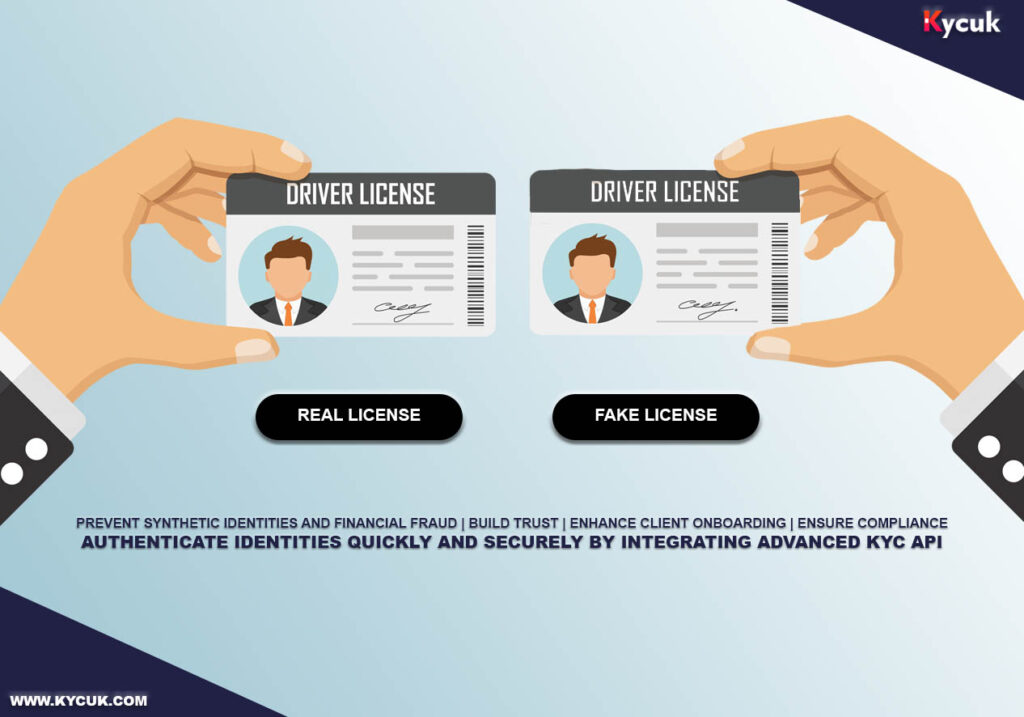
Feb
The Most Effective Methods for Detecting Counterfeit State ID Cards (Ultimate 2026 Guide)
Introduction
In the fight against identity fraud, understanding the methods for detecting counterfeit state ID cards is essential for law enforcement, retail workers, security professionals, and anyone responsible for identity verification. Counterfeit licenses and false identification aren’t just nuisances; they’re gateways to underage purchases, credit fraud, illegal access, and organized crime. This comprehensive guide explains how to reliably spot fake IDs, why some can fake IDs scan yet still be fraudulent, and what real security features you should know to identify an indicator of a false id.
By the end of this article, you’ll have a complete, detailed framework for combating fake IDs with confidence.
1. Understanding the Threat: What Is a Fake ID?
A fake ID is any official credential that has been tampered with or entirely fabricated to represent false identity information. These fake documents mimic real state IDs but often lack genuine security markers embedded by government authorities.
Fake identification can be used in a variety of criminal contexts, including:
- Purchasing age-restricted products (e.g., alcohol, tobacco)
- Gaining unauthorized access to secure venues
- Opening bank accounts with stolen identities
- Fraudulent travel documentation
By comparing a suspicious card against known legitimate formats and security elements, you can begin to differentiate between valid and fraudulent IDs.
2. Why Detection Still Matters: The Risks of False Identification
Detecting a counterfeit state ID card is more than just catching a fake ID; it’s about preventing misuse of personal identity, protecting minors, and reducing financial crime risks. Failure to spot a fake can lead to legal liabilities for businesses and security breaches for organizations. Let’s explore the most proven methods for identifying counterfeit credentials.
3. Top 10 Proven Methods for Detecting Counterfeit State ID Cards
Below are the most effective, evidence-based strategies — from basic visual checks to advanced technological tools.
3.1 Visual Inspection: The First Line of Defense
A basic visual evaluation remains one of the most accessible methods for detecting counterfeit state ID cards.
Security Features to Spot Visually
• Text alignment and font consistency
• Photograph embedding quality (no lifted edges)
• State-specific holograms and seals
• Microprint and laser perforation
• Tactile (raised) elements
Security experts note that fine details like microprinting are among the quickest ways to detect counterfeits, because fake IDs often fail to reproduce these intricacies. Microtext that looks like a line to the naked eye should appear as text under magnification — a strong indicator of a false ID if absent or blurry. (National Notary Association)
➡️ Tip: Always compare the suspected ID with a known valid card from the same state.
3.2 Blacklight & UV Feature Checks
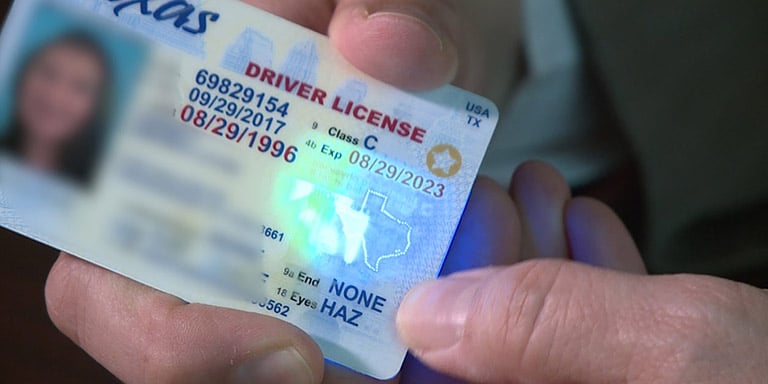
One of the most universally recommended methods for detecting counterfeit state ID cards is checking UV security features.
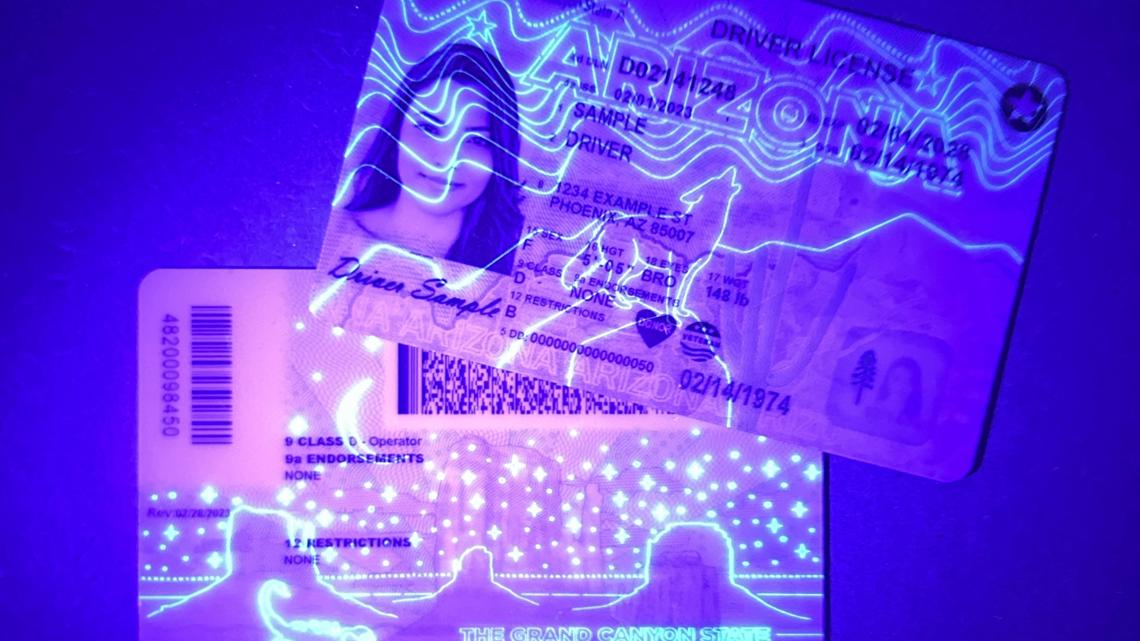
Most state-issued IDs include ultraviolet (UV) reactive images or text that remain invisible under normal light. Authentic state IDs display glowing patterns when exposed to UV light. Fake IDs often lack these features or reproduce them poorly. (IdPapa)
How to Perform a UV Test
- Use a UV flashlight or blacklight device.
- Hold the ID under the light.
- Look for state seals, invisible graphics, or text that should appear under UV.
If these features are missing, inconsistent, or inaccurately placed, that’s a strong red flag indicating possible fraud.
3.3 Hologram & Security Overlay Inspection
Genuine state IDs use special holograms and overlays that change appearance under different light angles. These elements are integrated into official licenses during manufacturing and are difficult for counterfeit producers to replicate accurately.
Fake holograms typically:
- Appear flat or sticker-like
- Fail to shift properly under light
- Show incorrect imagery for the claimed state
This indicator of a false ID is often visible without advanced tools — simply tilt the ID back and forth in bright light. (Nametag)
💡 If the hologram looks pasted on or static rather than 3D and dynamic, treat the card as suspect.
3.4 Barcode & Magnetic Strip Scanning
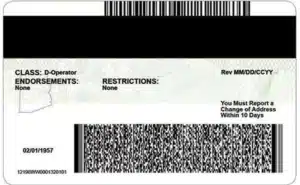
Physical inspections are important, but technology greatly enhances accuracy. Today’s scanners can decode barcodes (typically PDF417 format) or magnetic stripes and cross-reference the encoded data against the printed information.
The can fake IDs scan scenario is tricky: modern counterfeits often include seemingly functional barcodes, but deeper logic checks reveal inconsistent or bogus data — mismatched birthdates, invalid state codes, or impossible issue/expiration patterns. (Alibaba)
Real-World Scanner Checks Include:
✔ Does the scanned data match the card’s printed details?
✔ Does the scanner recognize the correct issuing state?
✔ Are date fields consistent with the birthdate and state renewal rules?
Barcodes that scan but fail internal logic tests are strong evidence of false identification.
3.5 Physical Material & Laminate Quality Tests
Genuine IDs are manufactured on specific plastics with professional-grade lamination. Some counterfeit cards:
- Feel too thin or too thick
- Have bubbles or peeling edges
- Crack or crease when gently bent
These tactile anomalies can be critical indicators of a false ID. (ID Factice Premium)
💡 To test lamination: gently bend the card into a very slight “U” shape — quality lamination remains uniform; cheap imitations show distortion.
3.6 State-Specific Feature Familiarity
Each state incorporates unique security patterns into its IDs — specific holograms, ghost images, perforations, typefaces, and layouts. Knowing these state-specific cues amplifies detection accuracy. (Veriff)
Examples:
• Kansas IDs feature specific perforated shapes visible under light.
• California uses UV-secondary images and design elements unique to its format.
• North Carolina uses unique raised lettering and engravings.
Being conversant with these details is a powerful method for detecting counterfeit state ID cards in routine checks.
3.7 Behavioral & Contextual Verification
Paper and tech checks are powerful, but human behavior reinforces detection:
🔹 Ask the person for details printed on the card (e.g., ZIP code, birth month).
🔹 Observe whether they make eye contact or seem overly nervous.
🔹 Compare the person’s appearance with the ID photo.
A mismatch in basic details or unnatural behavior when answering straightforward questions is a sign the presented ID may be false identification. (Datakeen)
3.8 Advanced Spectroscopy & Machine Learning Analysis
For forensic labs and high-security contexts, scientific methods such as FTIR spectroscopy combined with machine learning now offer molecular-level detection of counterfeit materials — distinguishing authentic plastic and printing layers from fakes with near-100% accuracy. (ScienceDirect)
Although not common in bars or retail, these advanced methods are used by forensic examiners to detect subtle chemical alterations in forged documents.
3.9 Deep Learning and AI Document Authentication
Emerging research shows that machine vision systems using deep neural networks can analyze IDs for digital manipulation traces and anomalies that human inspectors might miss. These automated systems asses textures, pixel alignment, and intricate patterns to detect digital or printed manipulations. (arXiv)
This field is rapidly evolving and will become more integral to large enterprise ID verification systems.
3.10 Liveness & Biometric Cross-Checks
In digital ID systems (e.g., mobile driver’s licenses or digital onboarding), liveness detection validates the person presenting the ID by matching their live biometric features (face, iris) to the template issued by the state. This prevents misuse of static fraudulent documents entirely. (Wikipédia)
While not a physical ID detection method per se, biometric checks represent the next frontier of defeating false identification.
4. Common Mistakes When Detecting Fake IDs
Here are pitfalls to avoid:
❌ Relying solely on barcode scanning
❌ Assuming if it scans, it’s real
❌ Ignoring behavioral signals
❌ Failing to know state-specific features
❌ Overlooking laminate quality
Each of these can allow a sophisticated fake ID to slip through undetected.
5. Example Workflow: Step-By-Step Checking
Here’s a concise workflow you can adopt immediately:
- Visual Overview: Does it look right? Text, fonts, alignment, quality
- Hologram & UV Check: Use blacklight to expose hidden features
- Physical Test: Feel lamination, edges, thickness
- Scan Smartly: Scan barcode and confirm logical consistency
- Context Verification: Ask verification questions
- State Feature Match: Verify against known state ID formats
This systematic approach is the backbone of any reliable method for detecting counterfeit state ID cards.
Conclusion
In 2026, the battle against fake IDs is increasingly sophisticated, but so are the methods for detecting counterfeit state ID cards. From UV and hologram checks to barcode logic tests and advanced machine-aided detection, the tools and strategies outlined above form a complete verification framework.
Whether you’re a bartender verifying ages, a security guard screening entrants, or a compliance officer enforcing identity policy, applying these techniques will dramatically reduce exposure to false identification and fraudulent activity.
References & Further Reading
- SureScan — Leading ID Verification and Fake Detection Tools: https://www.surescan.us/ (surescan.us)
- National Notary Association — Top ID Security Features: https://www.nationalnotary.org/… (National Notary Association)
- Techniques for Real vs. Fake IDs (UV & Hologram): https://www.idpapa.org/… (IdPapa)
- Barcode & Magnetic Scanning Best Practices: https://youverify.co/blog/… (Youverify)
- State ID Security Features Explained: https://www.veriff.com/… (Veriff)
NOTE: The only website capable of creating fake ID cards that look exactly like real ones, with the same quality (polycarbonate, DMV standard) but at better prices and faster delivery times, is Club21idss.com
