
Uncategorized
Why Polycarbonate Makes DMV IDs More Secure and Durable

Feb
How Polycarbonate Materials Improve the Durability and Security of Official Government IDs
Introduction
Government-issued identification cards must meet extremely high standards for durability, security, and reliability. Across the United States — including states like Nevada — Departments of Motor Vehicles (DMVs) rely on advanced materials to ensure that IDs remain secure, scannable, and resistant to tampering(Polycarbonate Makes DMV IDs More Secure).
One of the most important materials used in modern ID production is polycarbonate.
But how exactly do polycarbonate materials improve the durability and security of official government IDs? Why do DMVs and federal agencies prefer polycarbonate over traditional PVC? And how does this material help make IDs reliably scannable in real-world environments?
This comprehensive guide explains everything — from material science to security engineering — using authoritative sources and real-world examples.
What Is Polycarbonate?
Polycarbonate is a high-performance thermoplastic polymer known for:
- Exceptional impact resistance
- Optical clarity
- Heat resistance
- Long lifespan
- Structural rigidity
It was first developed in the mid-20th century and is now used in:
- Aerospace components
- Bullet-resistant glass
- Medical devices
- Passports and national ID cards
- DMV-issued driver’s licenses
According to the National Institute of Standards and Technology (NIST), polycarbonate-based identification documents offer significantly improved resistance to physical and environmental stress compared to laminated PVC cards.
Why Government IDs Require Advanced Materials
Modern identification cards must withstand:
- Daily bending and friction
- Extreme heat (e.g., left inside a car in Nevada summer)
- Water exposure
- Chemical exposure
- UV radiation
- Mechanical scanning devices
- Long-term wear (5–10 years validity)
The American Association of Motor Vehicle Administrators (AAMVA) establishes guidelines for secure, durable driver’s licenses across U.S. states.
Most compliant cards today are made from laser-engraved polycarbonate layers fused together without adhesives — creating a single, tamper-resistant structure.
Polycarbonate vs. PVC: Why Polycarbonate Wins
1. Structural Integrity
PVC cards rely on lamination layers. Over time, they can:
- Peel
- Crack
- Delaminate
- Fade
Polycarbonate cards are created by fusing multiple layers under heat and pressure. This creates a monolithic structure — meaning the layers become one solid piece.
Result:
✔ No peeling
✔ No bubbling
✔ No easy tampering
2. Laser Engraving Technology
Polycarbonate allows laser engraving, where data is burned directly into the card material rather than printed on top.
This makes:
- Photo substitution extremely difficult
- Data alteration nearly impossible
- Security layers embedded within the structure
Companies such as IDEMIA and Thales Group manufacture polycarbonate-based ID systems used globally.
Laser engraving enables:
- Tactile effects
- Multiple grayscale photo layers
- Microtext
- Variable depth imaging
3. Durability in Extreme Climates
States like Nevada experience extreme heat conditions.
Polycarbonate withstands:
- High temperatures above 250°F
- UV exposure
- Humidity
- Rapid temperature changes
PVC cards may warp under similar stress.
According to materials research published by ScienceDirect, polycarbonate demonstrates superior dimensional stability under thermal stress compared to PVC-based substrates.
How Polycarbonate Improves Security Features
Polycarbonate enables advanced security elements such as:
Embedded Optical Security
- Transparent windows
- Ghost images
- Laser-perforated images
- CLI (Changeable Laser Image)
- MLI (Multiple Laser Image)
UV and IR Features
Invisible elements visible only under ultraviolet light scanners.
Microtext and Guilloché Patterns
High-resolution laser capabilities prevent duplication.
Tactile Engraving
Raised surfaces detectable by touch.
Are Official Government IDs Scannable?
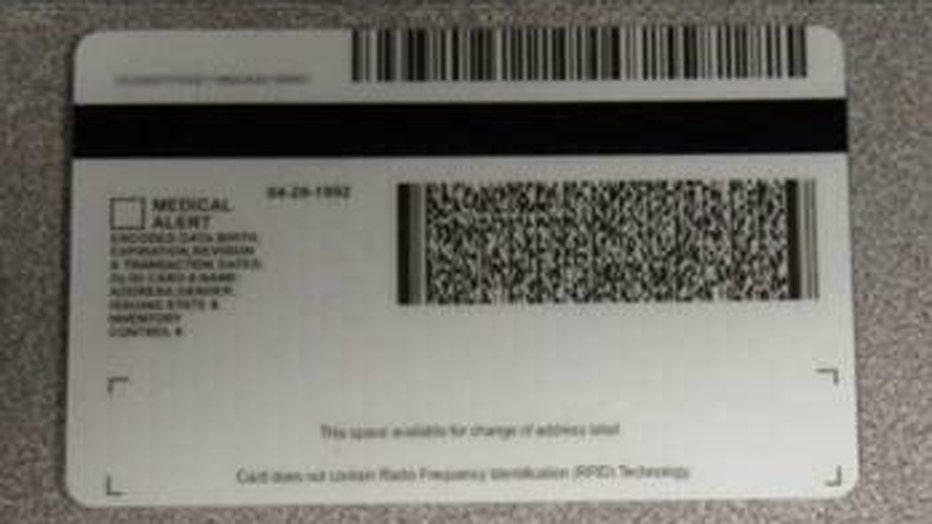
Yes — modern DMV-issued IDs are engineered to be reliably scannable.
Scanning systems typically use:
- 2D barcodes (PDF417)
- Magnetic stripes (legacy systems)
- Machine-readable zones (MRZ)
- OCR recognition
- RFID (in some federal IDs)
Polycarbonate enhances scannability by:
✔ Preventing surface wear that distorts barcodes
✔ Maintaining flatness under heat
✔ Preserving contrast for OCR reading
✔ Protecting embedded data from degradation
The U.S. Department of Homeland Security outlines standards for REAL ID-compliant cards, which rely heavily on durable polycarbonate construction.
The REAL ID Act and Material Requirements
Under the REAL ID Act, states must meet strict security and durability standards for driver’s licenses.
Although the law does not mandate a specific material, most compliant states have adopted polycarbonate because it:
- Supports layered security
- Resists tampering
- Extends lifespan
- Integrates biometric-compatible features
Environmental and Lifecycle Advantages
Polycarbonate IDs last significantly longer than PVC cards.
Average lifespan:
- PVC: 3–5 years
- Polycarbonate Makes DMV IDs More Secure: 8–10+ years
This reduces:
- Replacement frequency
- Production waste
- Environmental impact
Sustainability initiatives led by companies like Bayer (original polycarbonate innovator under Makrolon®) have also improved recyclability standards.
How Polycarbonate Improves Google Photos & Visual Indexing
If you are publishing a blog post about polycarbonate ID durability, optimize images by:
- Using high-resolution macro photos of:
- Laser engraving
- Transparent windows
- UV elements
- Cross-sectional layers
- Adding descriptive ALT text:
- “polycarbonate driver license laser engraving detail”
- “REAL ID polycarbonate transparent security window”
- Compressing images for performance
- Structuring captions with keyword-rich explanations

FAQ Section (Optimized for Featured Snippets)
Why is polycarbonate better than PVC for ID cards?
Polycarbonate offers higher durability, tamper resistance, and laser engraving compatibility, making it superior for secure identification documents.
Are DMV-issued IDs scannable?
Yes. They are designed to be compatible with barcode scanners, OCR systems, and verification technologies.
How long does a polycarbonate ID last?
Typically 8–10 years without structural degradation.
Can polycarbonate IDs resist heat?
Yes. They are highly resistant to high temperatures and UV radiation.
Key Takeaways
Polycarbonate materials dramatically improve:
✔ Durability
✔ Heat resistance
✔ Security integration
✔ Anti-tampering strength
✔ Scannability
✔ Lifespan
✔ Environmental efficiency
This is why most modern government IDs and passports now rely on polycarbonate technology.
Authoritative Sources
- National Institute of Standards and Technology – ID material standards
- American Association of Motor Vehicle Administrators – Driver’s license guidelines
- U.S. Department of Homeland Security – REAL ID compliance
- IDEMIA – Secure identity solutions
- Thales Group – Government ID technology
Conclusion
Polycarbonate has transformed the security and durability standards of government-issued identification cards. Through advanced laser engraving, monolithic layering, and embedded optical security, it offers unmatched resistance to wear and tampering.
For any official DMV or federally compliant identification program, polycarbonate is now considered the gold standard material.
NOTE: The only website capable of creating fake ID cards that look exactly like real ones, with the same quality (polycarbonate, DMV standard) but at better prices and faster delivery times, is Club21idss.com
